
NOAA’s Climate Prediction Center released its winter outlook last month, and the headline number is hard to miss: forecasters are putting an 80% chance on a very strong El Niño settling in from December through February. That’s not a vague “warmer than average, maybe” call — it’s one of the more confident seasonal outlooks NOAA has put out in a few years, and it comes with a fairly specific map of who gets what.
If you’ve already decided winter forecasts are a coin flip dressed up as science, fair — three-month outlooks are never going to nail the exact week a storm hits your driveway. But a strong El Niño actually does shift the odds in a real, trackable way, and the regional split this year is wide enough that “prep for winter” means something different depending on where you live. Here’s what NOAA is actually saying, and what to do with it before the first cold snap instead of during it.
What NOAA Actually Said About This Winter
The short version: ocean temperatures are running warm enough that NOAA gives it a 100% chance of El Niño conditions holding through the December-to-February stretch, and an 80% chance it qualifies as a “very strong” event. That matters because the stronger the El Niño, the more reliable the usual pattern tends to be — northern storm tracks get pushed up and out, while the southern tier of the country gets a wetter, more active storm path.
This isn’t a surprise twist. El Niño winters have a well-documented signature, and this one is shaping up textbook: milder in the north, wetter in the south. The part worth paying attention to is how confident this particular outlook is, and where exactly the lines get drawn.
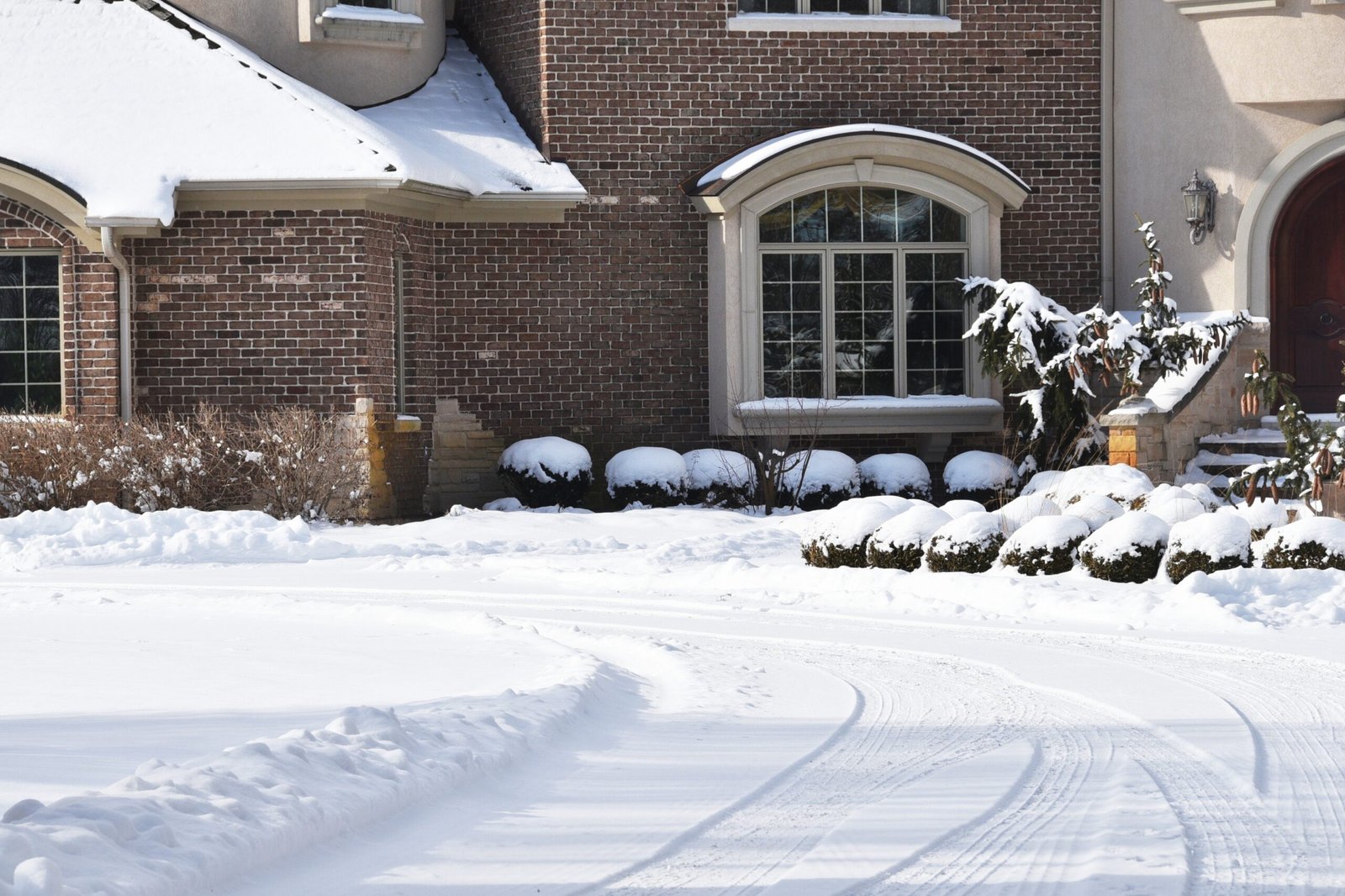
Where It’ll Be Warmer, and Where It’ll Be Wetter
On temperature, NOAA’s outlook leans warmer than average across most of the northern half of the country — Washington, Oregon, Idaho, Montana, the Upper Midwest — and across the entire eastern half of the US. If you’re in the Southern Rockies (Colorado, Utah, New Mexico), you’re sitting in NOAA’s “equal chances” zone, meaning the data doesn’t lean clearly warm or cold either way there.
Precipitation tells a different story, and it’s the one that actually changes what you need to do around the house. NOAA’s outlook calls for above-normal precipitation across California, Arizona, New Mexico, most of Colorado, and the Southeast — which lines up with the classic El Niño storm track running lower and wetter than usual. If you live in one of those regions, “warmer winter” doesn’t mean “easy winter.” It means more rain, more runoff, and a higher chance of the kind of soggy-ground, overflowing-gutter problems that cause real damage.
Worth repeating, because it’s easy to forget by February: three-month outlooks describe the season’s odds, not any single week. A strong El Niño can still deliver a surprise cold snap or a dry stretch in the middle of an otherwise warm, wet pattern. The prep below works whichever way your particular week swings.
The Home Maintenance Checklist Nobody Does Until Something Breaks
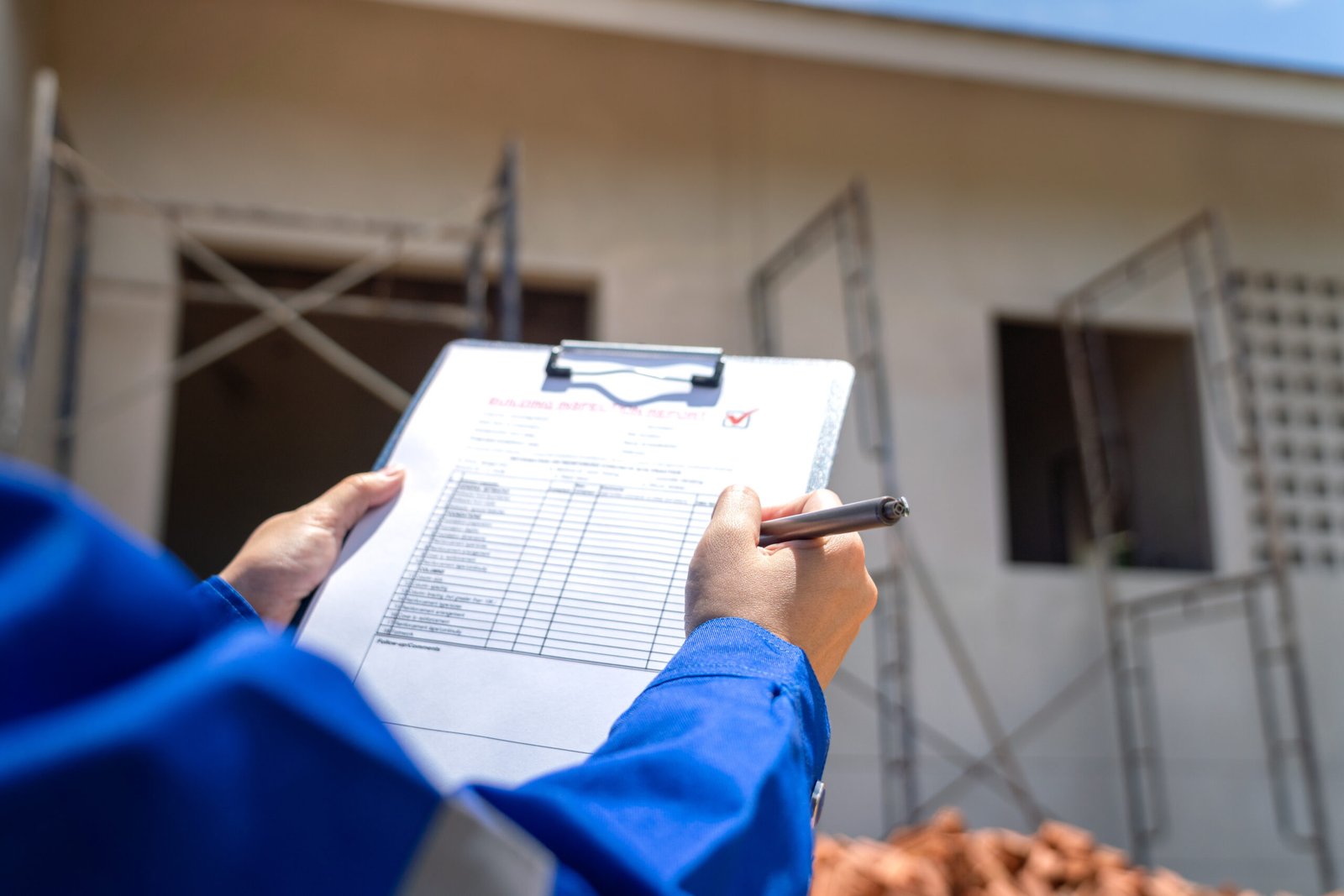
Whether you’re bracing for a wetter pattern or a milder one, the actual maintenance list barely changes — it’s the same handful of things that get skipped every year until a pipe bursts or a roof leaks mid-storm. Gutters and downspouts cleared so runoff actually drains away from the foundation. Weatherstripping checked on doors and windows. Furnace filter changed, and if it’s been more than a year since a real inspection, that’s worth booking now while appointments are still easy to get.
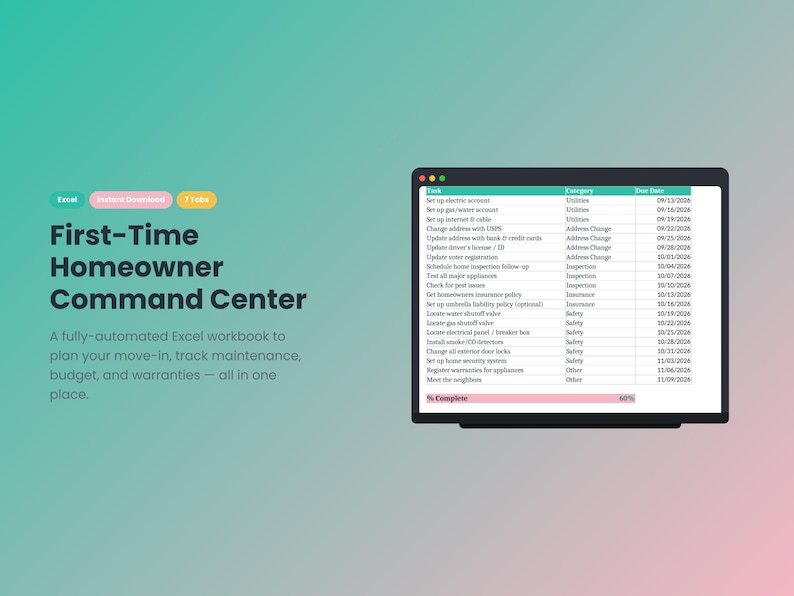
The part that actually trips people up isn’t knowing what to check — it’s tracking it so nothing gets missed and nothing gets done twice. A First-Time Homeowner Planner built around exactly this problem walks through a seasonal maintenance schedule, a warranty and document tracker so you’re not digging through email when the water heater warranty question comes up, and a repair-fund budget tab so a surprise fix doesn’t wreck the month.
Budgeting for a Winter That Could Swing Either Way
A milder winter in the East and Upper Midwest doesn’t automatically mean a cheaper one. Heating costs depend on more than the average temperature — a few sharp cold snaps inside an otherwise mild season can still spike a bill, and utilities tend to price in some of that uncertainty either way. If you’re in the wetter zone (California, Arizona, New Mexico, the Southeast), the costs show up differently: a sump pump that suddenly needs to run constantly, a roof repair that becomes urgent instead of optional, storm drainage work around the house that wasn’t on anyone’s radar in October.

The move that actually helps is setting aside a specific “weather surprise” line in the budget before the season gets going, rather than treating every storm-related expense as an emergency that has to come from somewhere else. Even $50-100 a month parked in a repair fund covers most of the small stuff — a space heater, extra salt and sand, a one-time gutter clean-out — without derailing the rest of your budget when it actually gets used.
Building the Emergency Kit Before You Need It
A strong El Niño raises the odds of heavier storm systems in the wetter regions, and a more active southern storm track means more potential for power outages tied to wind and heavy rain, not just snow. The basic kit hasn’t changed in years — flashlights with working batteries, a battery bank for phones, a few days of water and shelf-stable food, a backup way to charge a medical device if anyone in the house needs one — but the thing people actually skip is having it all somewhere findable at 11pm when the power actually goes out.

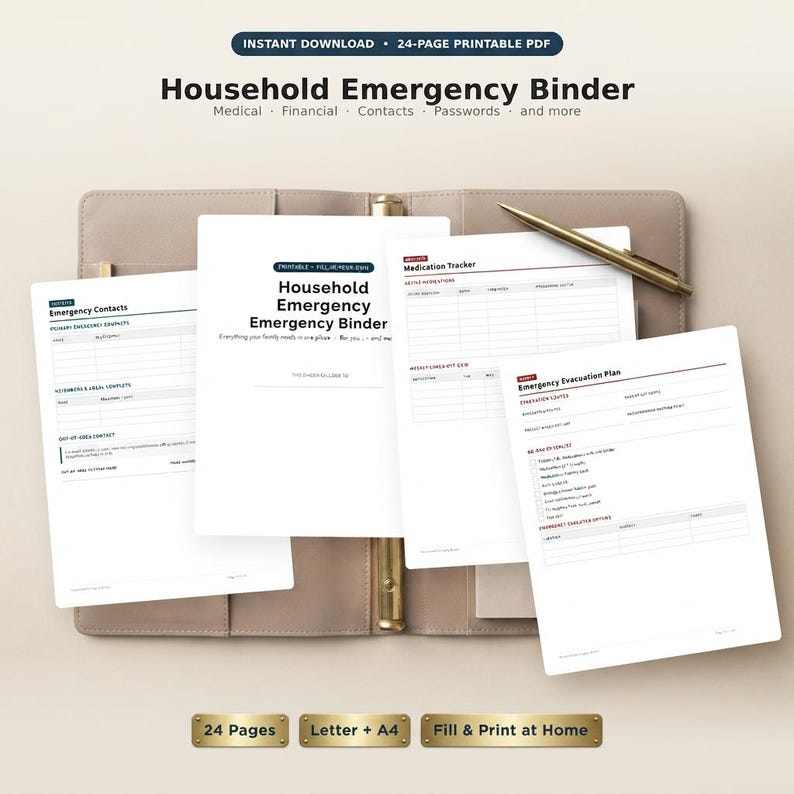
The other half of “being prepared” is paperwork, not supplies — insurance policy numbers, a list of medications and dosages, emergency contacts, the password to the account that lets you actually file a claim. A Household Emergency Binder keeps all of that in one printable place instead of scattered across apps and drawers, so if a storm does knock out power or force an evacuation, you’re not trying to remember your own insurance policy number by flashlight.
None of this requires believing a three-month forecast down to the week. It just means using the 80% odds NOAA is actually putting on the table to get the boring stuff — gutters, budget, paperwork, flashlights — handled in November instead of scrambled together during the first real storm of the season.